OpenAI has followed GPT-6 Astra with two more GPT-6 models, and both are now selectable in CRHQ through the Codex provider. They round out the GPT-6 family below the Astra flagship, at much lower prices.
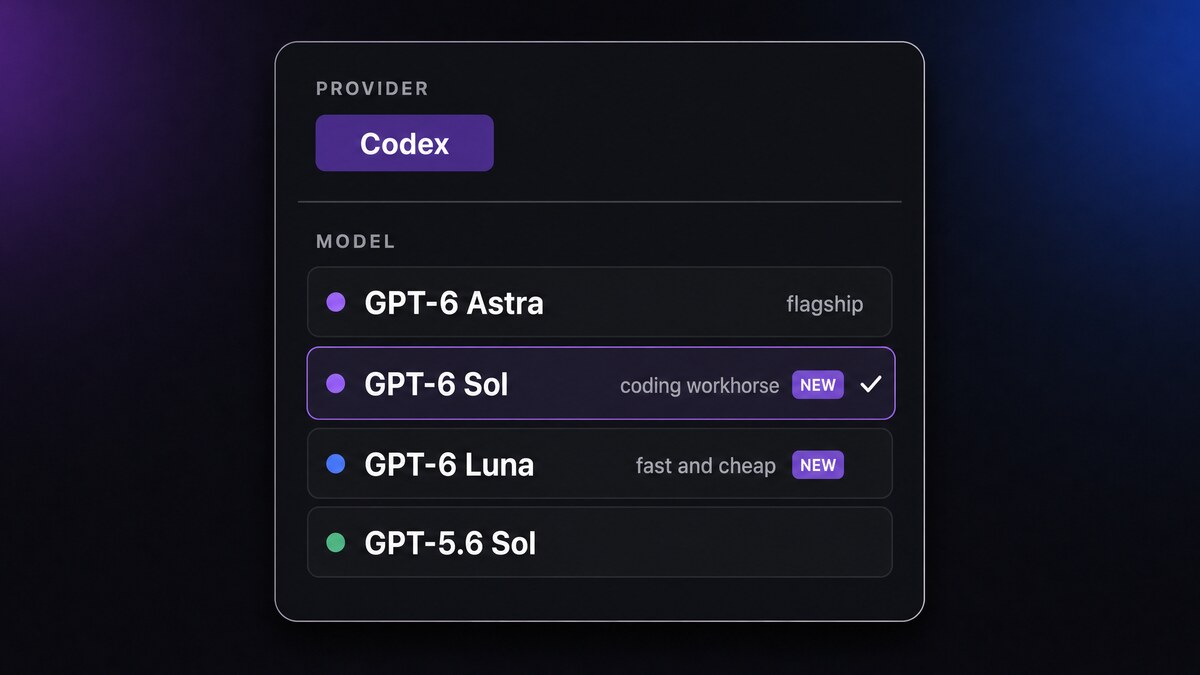
The two new models
- GPT-6 Sol sits just below Astra. It is built for real work, including coding, at a fraction of the flagship's price. For most day-to-day agentic tasks it is the sensible default in the GPT-6 family.
- GPT-6 Luna is the small, fast one, designed for high-volume jobs with a clear goal: summarising documents, answering short questions, classifying, and similar work where you want speed and very low cost.
Together with GPT-6 Astra, released earlier this month, you now have a full GPT-6 lineup: a flagship for the hardest work, a workhorse for everyday coding, and a cheap high-volume option.
Pricing
OpenAI cut prices sharply with this pair. Both are well below their GPT-5.6 counterparts.
| Model | Input, per 1M | Output, per 1M | Cached input | Best for |
|---|---|---|---|---|
| GPT-6 Astra | $10.00 | $50.00 | $1.00 | The hardest reasoning and agentic work |
| GPT-6 Sol | $2.00 | $10.00 | $0.20 | Everyday coding and agentic tasks |
| GPT-6 Luna | $0.10 | $0.50 | $0.01 | High-volume, well-scoped jobs |
These are equivalent token values based on OpenAI's published rates. Actual billing runs through your own OpenAI or Codex plan.
How to use them
- Start a new session, or edit an agent's default model.
- Choose provider Codex.
- Pick GPT-6 Sol or GPT-6 Luna from the dropdown.
- Send your message as normal. Delegation, artifacts, skills, and tools all work identically.
Your satellite needs the same OpenAI or Codex connection that already powers the other GPT models. Per-turn cost appears in each session's Costs tab.
Availability
| Fact | Value |
|---|---|
| Availability | All CRHQ satellites |
| Live since | 2026-09-22 |
| Provider | Codex (OpenAI) |
| Client action required | None, beyond an OpenAI or Codex connection |
| Billing | Through your own OpenAI or Codex plan |